
Call: 08045477786
 Send Inquiry
 Send Inquiry
Concentrated Nitric Acid
Price 48 INR/ Liter
MOQ : 100 Liters
Concentrated Nitric Acid Specification
- Molecular Formula
- HNO3
- Molecular Weight
- 63.01 g/mol
- Refractive Rate
- 1.397
- Structural Formula
- NO2OH
- HS Code
- 28080010
- Smell
- Acrid, Choking Odor
- Taste
- Corrosive (not to be tasted)
- Boiling point
- 83C
- Classification
- Inorganic Acid
- Inorganic Acid Types
- Nitric Acid (HNO3)
- Grade
- Industrial Grade
- Purity
- High
- Application
- Fertilizer, Explosives, Metal Processing, Laboratory Reagent
- Appearance
- Colorless to Yellowish Liquid
- CAS No
- 7697-37-2
- EINECS No
- 231-714-2
- Other Names
- Aqua fortis, Spirit of Nitre
- Usage
- Industrial
- Melting Point
- -41.6C
- Density
- 1.51 Gram per cubic centimeter(g/cm3)
- Solubility
- Miscible in Water
- Raw Material
- Ammonia, Air
Concentrated Nitric Acid Trade Information
- Minimum Order Quantity
- 100 Liters
- Supply Ability
- 1000 Liters Per Day
- Delivery Time
- 7 Days
- Main Domestic Market
- Rajasthan
About Concentrated Nitric Acid
| Form | Liquid |
| Usage/Application | Making plastic |
| Grade Standard | Technical Grade |
| Purity (%) | 99 % |
| Packaging Type | Barrel |
| Cas Number | 7697-37-2 |
| Melting Point | -42 Degree C |
| Boiling Point | 83 Degree C |
| Formula | HNO3 |
| Molar Mass | 63.01 g/mol |
Key Features and Specifications
Concentrated Nitric Acid is available with a purity of 68-70% by weight and exhibits a strongly acidic pH below 1 in 1M solutions. It is shipped in safe containers such as HDPE drums, glass bottles, or carboys, ensuring chemical stability during transit. This high-grade acid is completely miscible in water, with a density of 1.51 g/cm3, making it suitable for precision industrial and laboratory requirements.
Safe Handling and Storage Guidelines
Nitric Acid is extremely corrosive and oxidizing, necessitating storage in cool, dry, well-ventilated areas, away from organic substances and direct light to prevent decomposition into nitrogen oxides. Proper protective equipment, such as gloves and eye protection, must be worn during handling, and it should be kept in containers resistant to acid attack such as HDPE or glass bottles.
Industrial Applications and Benefits
This acid is crucial for producing fertilizers (notably ammonium nitrate), manufacturing explosives, and in metal processing for etching and cleaning. Its reliability and high purity also make it an essential laboratory reagent. Suppliers and manufacturers in India offer prompt and compliant distribution for industrial-scale operations, ensuring consistent product quality and supply.
FAQs of Concentrated Nitric Acid:
Q: How should concentrated nitric acid be stored to maintain stability?
A: Concentrated nitric acid should be stored in a cool, dry, and well-ventilated area away from organic materials and direct sunlight. Use acid-resistant containers such as HDPE drums, carboys, or glass bottles to prevent decomposition and minimize risk.Q: What are the primary industrial uses of concentrated nitric acid?
A: Concentrated nitric acid is primarily used in the manufacture of fertilizers (such as ammonium nitrate), explosives, metal processing (etching, cleaning), and as a laboratory reagent due to its strong oxidizing and acidic properties.Q: When handling nitric acid, what safety precautions are necessary?
A: It is important to use appropriate safety gear, such as acid-resistant gloves, goggles, and protective clothing. Work in a well-ventilated area and avoid contact with organic substances, as nitric acid is highly corrosive and a strong oxidizer.Q: Where is nitric acid typically distributed and who are the common suppliers?
A: Nitric acid is supplied by manufacturers, distributors, and traders across India, commonly packaged in HDPE drums, carboys, and glass bottles to ensure safe transportation and storage for industrial and laboratory clientele.Q: What happens if concentrated nitric acid is exposed to light or improper storage conditions?
A: Improper storage or exposure to light causes nitric acid to decompose, releasing nitrogen oxides (NOx), which are hazardous gases. This can diminish the acids purity and effectiveness while posing safety risks.Q: How is concentrated nitric acid produced?
A: Industrial production of nitric acid involves the catalytic oxidation of ammonia from air, resulting in a high-purity product. This process ensures a consistent supply for a range of industrial and laboratory applications.Q: What are the benefits of using high-purity concentrated nitric acid in industrial processes?
A: High-purity concentrated nitric acid enables efficient and reliable chemical reactions, reduces contaminants in final products, and supports stringent quality requirements in fertilizer manufacture, explosives, and laboratory analysis.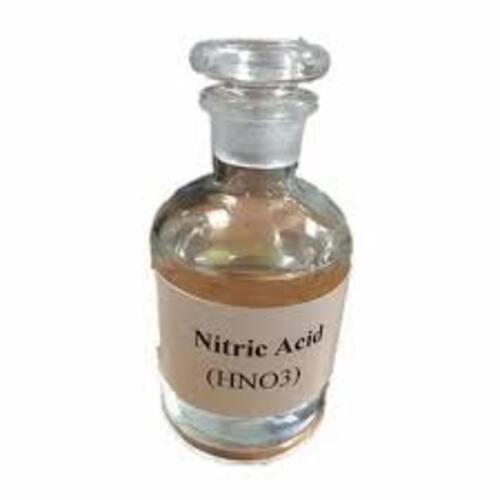
Tell us about your requirement

Price:
Quantity
Select Unit
- 50
- 100
- 200
- 250
- 500
- 1000+
Additional detail
Mobile number
Email

More Products in Nitric Acid Category
Nitric Acid HNO3
Minimum Order Quantity : 100 Kilograms, ,
Purity : High
Taste : Acrid (not for consumption)
Grade : Other, Technical Grade, Analytical Grade
Usage : Industrial
60 to 80 Percentage Nitric Acid
Price 30.00 INR / Kilograms
Minimum Order Quantity : 50 Kilograms, ,
Purity : High
Taste : Salty
Grade : Industrial Grade
Usage : Industrial
95 % Nitric Acid
Price 48 INR / Liter
Minimum Order Quantity : 100 Liters
Purity : High
Taste : Salty
Grade : Industrial Grade

Contact Details
SHARMA CHEMICALS
GST : 08DMBPK6885H1ZL
- Plot No:- E-210, Road No.9-E, VKIA,Jaipur - 302023, Rajasthan, India
- Phone :08045477786

 Send Inquiry
Developed and Managed by Infocom Network Private Limited.
